What Employers Should Do After a Positive Drug Test
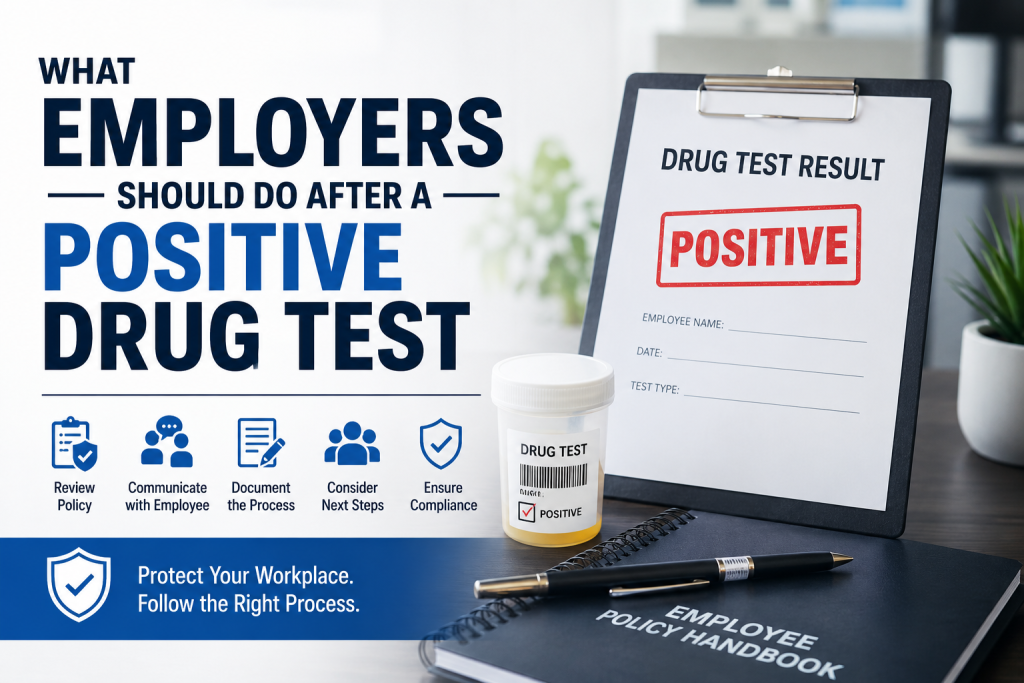
A positive drug test result can be a challenging situation for any employer. While maintaining a safe, productive, and compliant workplace is essential, employers must also ensure that they handle positive drug test results fairly, legally, and consistently. Reacting too quickly or without following proper procedures can expose businesses to legal risks, employee disputes, and workplace disruptions.
Whether you’re managing a small business, a transportation company regulated by Department of Transportation (DOT) rules, a healthcare organization, or a large corporation, having a clear action plan after receiving a positive drug test result is critical.
In this guide, we’ll explain what employers should do after a positive drug test, legal considerations, best practices, and how partnering with a trusted provider like US Health Testing can simplify the entire process.
Why Proper Drug Testing Procedures Matter
Workplace drug testing helps employers:
- Improve workplace safety
- Reduce accidents and injuries
- Maintain productivity
- Protect company reputation
- Comply with federal and state regulations
- Support a drug-free work environment
However, the process doesn’t end when a positive result is reported. The steps taken afterward can significantly impact both compliance and employee relations.
Step 1: Verify the Positive Drug Test Result
Before taking any employment action, employers should verify that the result has been properly reviewed and confirmed.
Most professional drug testing programs utilize a Medical Review Officer (MRO) to review non-negative laboratory results. The MRO contacts the employee to determine whether there is a legitimate medical explanation for the positive result, such as a valid prescription medication.
Why Verification Matters
A positive screening test alone should never be considered the final result. Confirmatory laboratory testing and MRO review help eliminate false positives and ensure accuracy.
Employers should:
- Wait for final confirmed results
- Review all testing documentation
- Ensure proper chain-of-custody procedures were followed
- Confirm MRO verification has been completed
Acting before receiving a verified result can create unnecessary legal and compliance issues.
Step 2: Review Company Drug-Free Workplace Policies
Every employer should have a written drug and alcohol testing policy that clearly outlines:
- Testing procedures
- Employee responsibilities
- Consequences of positive results
- Return-to-work requirements
- Employee assistance options
Once a positive result is confirmed, management should review the company’s policy before making any decisions.
Questions to consider include:
- Does the policy require termination?
- Is suspension permitted?
- Is rehabilitation offered?
- Are there state-specific employment protections?
Consistency is critical. Applying policies differently to different employees can lead to discrimination claims and legal challenges.
Step 3: Understand Applicable Laws and Regulations
Drug testing laws vary by state and industry.
Employers must consider:
DOT-Regulated Employees
For employees covered by DOT regulations, such as truck drivers, bus drivers, pilots, railroad workers, and pipeline employees, specific federal procedures must be followed.
A verified positive DOT drug test generally requires:
- Immediate removal from safety-sensitive duties
- Referral to a Substance Abuse Professional (SAP)
- Completion of the return-to-duty process before returning to safety-sensitive work
Employers must follow DOT regulations precisely to remain compliant.
State Employment Laws
Many states have unique drug testing laws that may affect:
- Employee rights
- Medical marijuana protections
- Notification requirements
- Disciplinary procedures
Employers should consult legal counsel when necessary to ensure compliance with local laws.
Step 4: Meet with the Employee
After confirming the result and reviewing company policies, employers should schedule a confidential meeting with the employee.
The purpose of the discussion should be to:
- Inform the employee of the confirmed result
- Review company policies
- Explain next steps
- Allow the employee an opportunity to respond
Best Practices for the Meeting
- Maintain confidentiality
- Include HR representation when appropriate
- Document the conversation
- Remain professional and objective
- Avoid accusations or emotional reactions
The goal is to communicate facts and follow policy, not to debate or speculate.
Step 5: Document Everything
Documentation is one of the most important protections for employers.
Maintain records of:
- Test results
- MRO reports
- Employee notifications
- Meetings and discussions
- Disciplinary actions
- Return-to-work requirements
Accurate documentation helps demonstrate compliance, supports consistency, and protects the organization if legal questions arise later.
Important Note
Drug testing records should be stored securely and separately from standard personnel files whenever required by applicable regulations.
Step 6: Determine Appropriate Disciplinary Action
The next step depends on company policy, applicable laws, and the employee’s position.
Potential actions may include:
Termination
Some organizations, particularly those in safety-sensitive industries, maintain zero-tolerance policies.
Termination may be appropriate when:
- Company policy clearly requires it
- Regulatory requirements support it
- The employee holds a high-risk position
- Previous violations have occurred
Suspension
Some employers choose temporary suspension pending further review or treatment.
Last-Chance Agreements
Many organizations utilize last-chance agreements that allow employees to retain employment under strict conditions, such as:
- Substance abuse counseling
- Follow-up testing
- Performance monitoring
- Continued compliance requirements
Referral to Treatment Programs
Employers increasingly recognize the value of helping employees address substance use issues while protecting workplace safety.
Step 7: Consider Employee Assistance Programs (EAPs)
Employee Assistance Programs can provide valuable support after a positive drug test.
Services may include:
- Substance abuse counseling
- Mental health support
- Treatment referrals
- Recovery resources
Providing access to professional assistance can help employees successfully address underlying issues while reducing turnover and future workplace risks.
Step 8: Implement Return-to-Work Procedures
If company policy allows continued employment, employers should establish a clear return-to-work process.
A return-to-work program may include:
- Completion of treatment recommendations
- Negative return-to-duty testing
- Follow-up testing schedule
- Supervisor monitoring
- Written compliance agreements
For DOT-regulated employees, return-to-duty procedures must follow federal requirements.
A structured return-to-work process protects both the employer and the employee.
Step 9: Evaluate Workplace Safety Risks
After a positive drug test, employers should assess whether broader workplace concerns exist.
Questions to consider:
- Was the positive test associated with an accident?
- Are additional employees at risk?
- Are current testing policies effective?
- Is supervisor training adequate?
A single positive result may reveal opportunities to strengthen workplace safety programs and prevention efforts.
Step 10: Strengthen Drug-Free Workplace Programs
The best response to a positive drug test is often prevention.
Employers should regularly evaluate:
Supervisor Training
Managers should know how to:
- Recognize signs of impairment
- Document observations
- Initiate reasonable suspicion testing
- Follow company procedures
Employee Education
Educational programs can help employees understand:
- Workplace policies
- Testing requirements
- Safety expectations
- Available support resources
Policy Reviews
Drug testing policies should be reviewed regularly to ensure compliance with evolving laws and industry requirements.
Common Mistakes Employers Should Avoid
Taking Immediate Action Without Verification
Never discipline an employee before receiving a confirmed and reviewed test result.
Violating Confidentiality
Drug testing information should only be shared with individuals who have a legitimate business need to know.
Applying Policies Inconsistently
Unequal treatment can create legal exposure and employee dissatisfaction.
Ignoring State Laws
State-specific drug testing regulations may differ significantly from federal standards.
Failing to Document Actions
Insufficient documentation can weaken an employer’s position during disputes or audits.
The Importance of Partnering with a Trusted Drug Testing Provider
Managing workplace drug testing internally can be complex. Employers need reliable testing, accurate reporting, compliance support, and nationwide accessibility.
That’s why many organizations choose US Health Testing as their trusted drug testing partner.
US Health Testing provides professional drug and alcohol testing services across the United States through an extensive nationwide network of collection sites. Employers can easily schedule testing online, receive accurate laboratory-confirmed results, and access support for workplace compliance programs.
Services include:
- Pre-employment drug testing
- Random drug testing programs
- DOT-compliant drug testing
- Reasonable suspicion testing
- Post-accident testing
- Return-to-duty testing
- Alcohol testing
- Consortium management services
With a focus on accuracy, convenience, and compliance, US Health Testing helps employers maintain safe workplaces while simplifying the testing process.
Building a Consistent Positive Drug Test Response Plan
Every employer should have a documented process that includes:
- Result verification
- Policy review
- Legal compliance review
- Employee notification
- Documentation
- Appropriate disciplinary action
- Treatment or assistance options
- Return-to-work procedures
- Follow-up testing
- Ongoing policy improvement
Having a structured response plan ensures fairness, reduces risk, and supports workplace safety goals.
Final Thoughts
A positive drug test is a serious workplace matter, but employers must respond carefully and professionally. The most effective approach combines compliance, consistency, documentation, and employee support while prioritizing workplace safety.
By verifying results, following established policies, understanding applicable regulations, and documenting every step, employers can confidently manage positive drug test situations while minimizing legal and operational risks.
Whether you need pre-employment testing, random testing programs, DOT compliance support, or nationwide collection site access, US Health Testing provides trusted, reliable drug testing solutions for employers across the USA. With professional testing services and compliance-focused support, businesses can maintain safer workplaces and confidently navigate every stage of the drug testing process.